


What does courage look like?
Sometimes, it’s making a difficult decision. Sometimes, it’s facing a challenge you’ve been avoiding. And sometimes, it’s simply getting up and taking the next step toward self-care when you’re tired, overwhelmed, and wondering whether the effort is worth it.
For Chris Rombola, owner of Fit House in Kenmore, NY, courage isn’t reserved for extraordinary moments. It’s something we practice in everyday life—in our work, our relationships, our health, our self-care, and the way we respond when things get difficult.
During a keynote address at a local school’s staff development day, Chris shared a message about purpose, resilience, and the importance of taking care of ourselves while we take care of others.
His message came down to two simple ideas:
Catch yourself in the act of being generated.
Take care of the person doing the pouring.
Both ideas offer a practical way to approach personal growth, prioritize our health and self-care, and find the strength to keep going when motivation fades.
Watch Chris’s full keynote below.
1. Recognize the Moments That Remind You Why Your Work Matters
Chris began with a question that many people who work in service-oriented professions can relate to.
What happens when the motivation wears off?
It’s easy to feel inspired at the beginning of a new school year, a new job, a new fitness program, or a new personal goal. But what happens months later, when you’re exhausted, frustrated, and feeling underappreciated?
Motivational speeches eventually fade from memory. What we need are ways to reconnect with our purpose in the middle of ordinary, difficult days.
Chris describes this practice as catching yourself in the act of being generated.
Being generated means noticing the moments that make you feel fully alive, connected, or reminded of what matters. These moments can be big or small.
It might be seeing your child accomplish something new. It might be a meaningful conversation, a personal breakthrough, or a small victory at work that reminds you why you chose your profession in the first place.
For an educator, it might be watching a student master a skill they’ve struggled with for months. For a parent, it might be a spontaneous hug. For someone working toward a health or fitness goal, it might be realizing that something which once felt difficult has become easier.
These moments are easy to overlook because we’re often already thinking about the next task, the next problem, or the next obligation.
Chris encourages us to pause instead.
Notice the moment. Let yourself appreciate it. Resist the urge to rush immediately into whatever comes next.
Over time, these experiences can become a source of strength—a reminder that our efforts matter, even when nobody else notices them.
Don’t Confuse Attention With Importance
One of the most powerful ideas in Chris’s keynote is the distinction between attention and importance.
We live in a world that constantly rewards visibility. Social media views, public recognition, and measurable achievements can make it seem as though the most important work is the work everyone sees.
But meaningful work often happens quietly.
A teacher might spend months helping a student develop a skill that most people take for granted. A parent might make countless small sacrifices that never receive recognition. Someone working to improve their health might make progress that nobody else notices.
The absence of applause doesn’t make that work less valuable.
As Chris reminds his audience, the impact we have on other people’s lives can be far greater than the attention we receive for it.
That’s worth remembering when progress feels slow, recognition is missing, or we’re tempted to question whether our efforts make a difference.
2. Take Care of the Person Doing the Pouring
Chris’s second message is especially relevant to teachers, parents, caregivers, and anyone who spends a significant amount of time taking care of other people.
You cannot make your life’s work taking care of other human beings while treating yourself like you don’t matter.
It’s easy to understand why people put themselves last.
Work is demanding. Family responsibilities don’t disappear. There are always more emails to answer, more tasks to finish, and more people who need something from us.
Self-care becomes something we’ll get around to eventually—when work slows down, when the kids need less attention, or when life becomes a little less hectic.
But those quieter seasons don’t always arrive.
Meanwhile, neglecting our own well-being can leave us physically exhausted, mentally drained, and increasingly frustrated.
Chris offers a different perspective: self-care isn’t about taking something away from the people who depend on you. It’s one of the ways you take care of them.
Consider the difference between two versions of yourself.
One is exhausted, sleeping poorly, barely moving, eating whatever is convenient, and trying to get through the day on whatever energy remains.
The other is stronger, better rested, adequately fueled, and more capable of handling stress.
Which version is more likely to have the patience to navigate a difficult situation? Which has more energy to invest in relationships? Which is better equipped to respond when life throws something unexpected into the mix?
Taking care of your health doesn’t guarantee that life will become easier. But self-care can help you build the physical and mental capacity to meet its demands.
And that matters whether you’re a teacher, a parent, a caregiver, or someone who simply wants to feel better and live well.
3. Why Strength Training Is About More Than Appearance
As the owner of Fit House, Chris has spent years helping people improve their strength and health.
That experience shapes his perspective on fitness.
Strength training isn’t simply about how you look. It’s about what your body can do, how you feel, and how well you’re equipped to participate in the life you want to live.
Building and maintaining muscle and strength becomes particularly important as we age. These physical capacities support everyday function and help us maintain greater independence as the years pass.
Being stronger can make ordinary activities more manageable. It can help you maintain your physical capabilities and give you more options for the activities you enjoy.
That’s why fitness deserves a place in a conversation about self-care.
You don’t have to pursue an extreme fitness goal or organize your entire life around exercise. You don’t need to become a competitive athlete or spend hours in the gym.
You need an approach that fits your life and helps you build the strength, health, and capacity to keep doing the things that matter to you.
At Fit House, that’s a central part of how we think about personal training: helping people build strength and improve their health in ways that support their lives beyond the gym.
4. Five Practical Ways to Invest in Your Self-Care and Health
In his keynote, Chris shares five practical habits that can help people create self-care routines that work.
None requires a complete lifestyle overhaul. They’re straightforward strategies that can make a meaningful difference when practiced consistently.
Strength Train Twice a Week
Give your body a reason to maintain its strength.
A well-designed strength training program can help you build muscle, improve physical function, and maintain strength as you age.
You don’t need to train every day or constantly push yourself to your limits. Start with a manageable schedule and a program suited to your abilities and goals.
For many people, two strength training sessions a week are a practical starting point.
The goal isn’t to make exercise another overwhelming obligation. It’s to establish a sustainable way to invest in your health.
Walk and Move Every Day
Walking is an accessible way to incorporate more physical activity into your routine.
Take a walk during your lunch break. Walk while your child is at practice. Invite a friend or family member to join you after dinner.
Look for opportunities to move that fit naturally into your existing schedule.
You don’t have to wait for a perfect block of free time. Sometimes, the easiest way to become more active is to use a little of the time you already have.
Eat Mostly Nutritious Foods
Healthy eating doesn’t require a perfect diet or an obsessive approach to food.
Chris encourages his audience to focus on the basics: eat mostly nutritious foods, plan ahead when possible, and make healthy choices easier to follow through on.
Preparing meals in advance or keeping convenient, nutritious options available can help when work and family responsibilities make cooking difficult.
The goal is to develop eating habits that support your health without adding unnecessary stress to your life.
Protect Your Sleep
Sleep isn’t wasted time. It’s part of taking care of yourself.
When you’re already tired from a demanding day, it’s tempting to stay up scrolling through your phone or trying to squeeze a little more productivity out of the evening.
But regularly sacrificing sleep can make it harder to feel and function at your best.
Protecting your sleep means recognizing that rest is a legitimate priority, not something you earn only after everything else is finished.
Make Time for Quiet
Our days are filled with demands for our attention: work, emails, notifications, news, conversations, and an endless stream of information.
Chris encourages people to make room for time when nobody needs anything from them.
That might mean sitting quietly for ten minutes, taking a walk without your phone, or spending a little time doing something restorative without trying to be productive.
This isn’t about adding another task to your to-do list. It’s about creating space to slow down and reconnect with yourself.
5. You Don’t Have to Change Everything at Once
After years of helping people make changes to their health and fitness, Chris has learned an important lesson: people often make change harder than it needs to be.
We set ambitious goals. We create elaborate plans. We expect ourselves to change multiple habits at once.
Then life gets in the way, the plan becomes difficult to maintain, and we feel as though we’ve failed.
Chris offers a simpler approach.
Pick one thing. Lower the bar. Take a step.
If exercising for an hour feels overwhelming, start with a ten-minute walk.
If going to the gym five days a week doesn’t fit your life, start by going once or twice.
If changing your entire diet feels like too much, focus on one meal or one habit you can improve.
A small step isn’t meaningless just because it’s small. It’s a starting point—and starting gives you something to build on.
This is also where we can learn from the way we support other people.
Think about how teachers help students learn. They meet students where they are, break complicated skills into manageable pieces, celebrate progress, and build from one step to the next.
We can apply that same patience to our own goals.
You don’t have to expect yourself to be perfect. You don’t have to wait until you have more time, more motivation, or a better plan.
You can begin where you are.
And when you’re ready, you can take the next step.
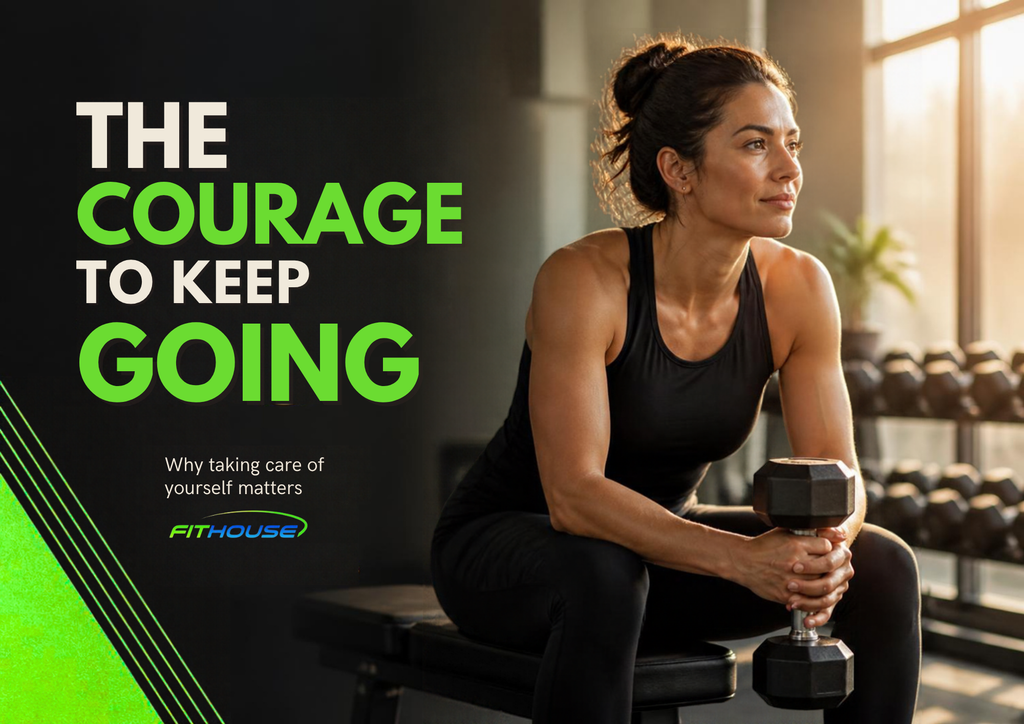
The Courage to Keep Going
Courage isn’t always dramatic.
Sometimes, it’s the decision to keep working toward something that matters when progress is slow. Sometimes, it’s recognizing that you need support. And sometimes, it’s finally making your own self-care and health a priority after years of putting everyone else first.
Chris’s message is a reminder that meaningful change doesn’t require us to transform our entire lives overnight.
It starts with paying attention to what matters, recognizing the small moments that remind us why our efforts are worthwhile, and taking practical steps to protect our own well-being.
Your purpose gives you a reason to keep going. Taking care of yourself gives you the capacity to keep going.
Both matter.
And whether you’re working in education, raising a family, caring for others, or simply trying to become a healthier version of yourself, you deserve that same care and attention.
Because the people you love deserve the best version of you.
The people you serve deserve the best version of you.
And you deserve the best version of you, too.
Build Strength That Supports Your Life
At Fit House, we help people in Kenmore and the greater Buffalo area build strength, improve their fitness, and develop sustainable habits that support long-term health.
Our approach to personal training is built around individualized coaching, accountability, and helping people make progress that carries over into everyday life.
You don’t have to do everything at once. You just have to be willing to take the next step.
If you’re ready to invest in your health, learn more about personal training at Fit House and find an approach that works for you.